English
- English
- Español
- Português
- русский
- Français
- 日本語
- Deutsch
- tiếng Việt
- Italiano
- Nederlands
- ภาษาไทย
- Polski
- 한국어
- Svenska
- magyar
- Malay
- বাংলা ভাষার
- Dansk
- Suomi
- हिन्दी
- Pilipino
- Türkçe
- Gaeilge
- العربية
- Indonesia
- Norsk
- تمل
- český
- ελληνικά
- український
- Javanese
- فارسی
- தமிழ்
- తెలుగు
- नेपाली
- Burmese
- български
- ລາວ
- Latine
- Қазақша
- Euskal
- Azərbaycan
- Slovenský jazyk
- Македонски
- Lietuvos
- Eesti Keel
- Română
- Slovenski
- मराठी
- Srpski језик
DIN VDE 0250 Rubber Cables
High quality VDE rubber power cables, customisable for mining, pumping and tunnelling projects
China Manufacturer DIN VDE 0250 Rubber Cables - Taitong Cable
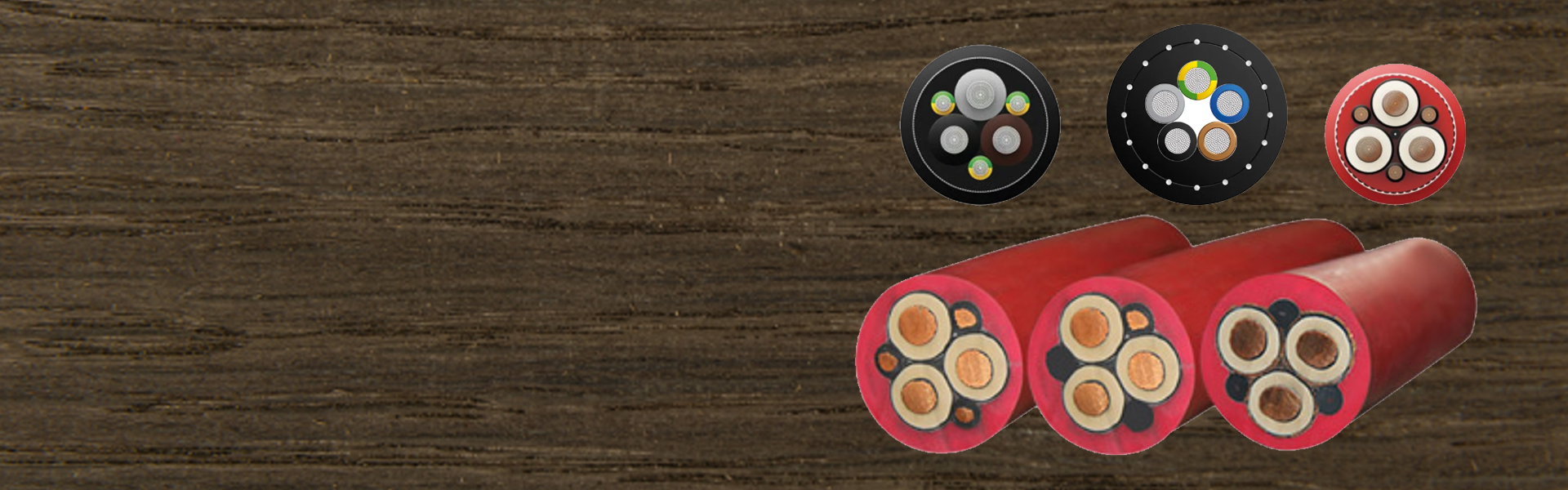
DIN VDE 0250 is a well‑recognised German standard series for elastomer‑insulated rubber cables, widely adopted across Europe and many international markets for flexible, mobile power supply applications. Within this standard family, our secondary category focuses on three core sub‑parts: DIN VDE 0250‑812, DIN VDE 0250‑813 and DIN VDE 0250‑814.
DIN VDE 0250 Rubber Cable Series
DIN VDE 0250‑812: NSSHÖU, NSSHÖU-J, NSSHÖU-O (0.6/1 kV)
DIN VDE 0250‑813: (N)TSCGEWÖU, (N)TSCGEWÖU-J/O, variants with pilot cores /3E (0.6/1 kV up to 18/30 kV)
DIN VDE 0250‑814: NSHTÖU, NSHTÖU-J, NSHTÖU-O (0.6/1 kV)
DIN VDE 0250 Rubber Cables Introduction
1, DIN VDE 0250‑812 specifies general‑purpose flexible rubber trailing cables rated at 0.6/1 kV, built with EPR or CR elastomeric insulation and rubber sheath and finely stranded copper conductors for excellent flexibility under frequent bending. Featuring good mechanical toughness and moderate oil resistance, they are widely used for portable tools, small hoists, workshop mobile machinery and temporary power supplies. While similar to IEC 60245 general rubber trailing cables and EN 50525 flexible cables, this standard imposes stricter requirements on rubber formulation, tensile test criteria and cable marking; direct substitution is not permitted without approval from the project engineer.
2, DIN VDE 0250‑813 covers heavy‑duty reeling rubber cables engineered for repeated winding, unwinding and cyclic bending on cable reels. Manufactured with reinforced rubber compounds, these cables resist severe mechanical stress, abrasion and tensile forces, with superior tensile and tear strength compared to 812. The product range spans voltages from 0.6/1 kV up to 18/30 kV, including widely used medium‑voltage ratings of 3.6/6 kV, 6/10 kV, 8.7/15 kV and 12/20 kV. Primarily used for mining machinery, tower cranes, gantry cranes and material handling equipment, it is most comparable to IEC 60245 heavy‑duty rubber cables. However, VDE 0250‑813 mandates dedicated reel fatigue testing not fully specified in IEC or EN 50525, making it the preferred choice for mining and crane projects that require compliance with German specifications.
3, DIN VDE 0250‑814 covers submersible pump rubber cables rated at 0.6/1 kV, constructed with special water‑blocking and water‑resistant rubber structures to deliver reliable insulation under prolonged continuous immersion. With outstanding water pressure resistance and low water permeation, these cables are intended for submersible pumps, well pumps and submerged motor assemblies. While IEC 60245 submersible rubber cables are the closest equivalent, DIN VDE 0250‑814 imposes stricter limits on water penetration and requires additional hydrostatic pressure and immersion ageing tests; EN 50525 has no matching dedicated clauses for submersible pump cables. This cable type is widely accepted in Germany, other EU nations, Africa, Southeast Asia and the Middle East, where German technical specifications are recognised.
You may scroll down to check the full product list of Taitong Cable’s available models under this series.
Taitong Cable is a large‑scale Chinese cable manufacturer with decades of manufacturing experience for export‑grade rubber cables. We have an independent in‑house R&D and technical team familiar with DIN VDE 0250‑812, 813 and 814 technical clauses, raw material control and full test procedures. We have accumulated rich experience supplying rubber cables for large industrial, mining, water pumping and infrastructure projects, enabling us to deliver customised complete rubber cable solutions for global clients. Upon request, we can provide supporting documentation including type test reports, routine test certificates, factory inspection records, material data sheets and relevant qualification files to meet the inspection and tender requirements of international buyers, engineering contractors and grid projects. We support custom conductor cross‑sections, cable lengths, colour marking and special compound adjustments according to project specifications.
FAQ
Q1: What are the main differences between DIN VDE 0250‑812, 813 and 814 rubber cables?
A1: 812 is for general flexible trailing cables for light‑to‑medium mobile equipment; 813 is heavy‑duty reeling cable for reel‑mounted machinery under cyclic winding stress; 814 is submersible pump rubber cable for continuous underwater working conditions. Their rubber compound, mechanical test items and application limits are defined separately.
Q2: Can DIN VDE 0250 rubber cables replace EN 50525 cables directly?
A2: Not automatically. Although both are low‑voltage flexible cables, test standards and rubber formulation requirements differ. You need to confirm the specification acceptance rule of your project before substitution.
Q3: Does Taitong Cable supply full set test documents for these VDE rubber cables?
A3: Yes. We can provide type test reports, factory test certificates and related qualification documents for DIN VDE 0250‑812, 813 and 814 products for client review and project submission.
Q4: Can you make custom sizes or special rubber compounds for DIN VDE 0250 rubber cables?
A4: Yes. Our technical team can develop custom sizes, special oil‑resistant, flame‑retardant or low‑smoke rubber versions based on your project requirements, subject to standard compliance.