English
- English
- Español
- Português
- русский
- Français
- 日本語
- Deutsch
- tiếng Việt
- Italiano
- Nederlands
- ภาษาไทย
- Polski
- 한국어
- Svenska
- magyar
- Malay
- বাংলা ভাষার
- Dansk
- Suomi
- हिन्दी
- Pilipino
- Türkçe
- Gaeilge
- العربية
- Indonesia
- Norsk
- تمل
- český
- ελληνικά
- український
- Javanese
- فارسی
- தமிழ்
- తెలుగు
- नेपाली
- Burmese
- български
- ລາວ
- Latine
- Қазақша
- Euskal
- Azərbaycan
- Slovenský jazyk
- Македонски
- Lietuvos
- Eesti Keel
- Română
- Slovenski
- मराठी
- Srpski језик
Selection of Power Cable Cross-section
How to select the cross-section of a power cable conductor?
I. Principles for Selection of Power Cable Conductor Cross-section
The cable conductor temperature under operating current shall not exceed the allowable value for the service life of the cable.The operating temperature of cable conductors in continuous service circuits shall comply with relevant specifications.
The cable conductor temperature under short-circuit current and short-circuit duration shall comply with the provisions.
The voltage drop of the connected circuit under operating current shall not exceed the allowable value of the circuit.
In addition to meeting the requirements of Items 1–3 above, the cross-section of power cables of 10 kV and below shall preferably be selected based on the principle of comprehensive economy considering the initial cable investment and operating costs during its service life.
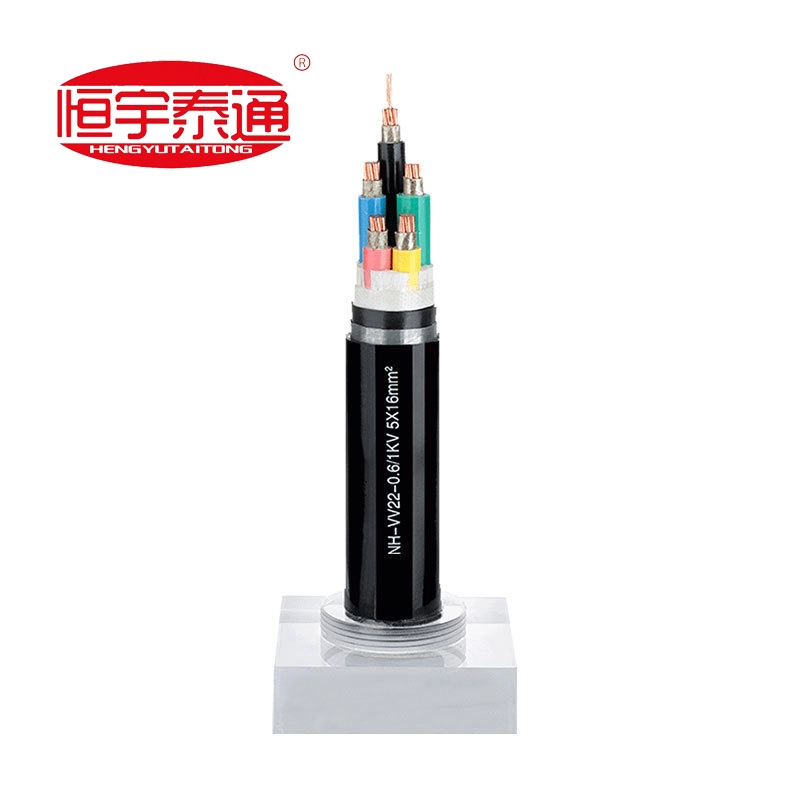
The cross-sections of cable models supplied by TaiTong Cable to global customers strictly comply with industry standards.
II. Selection of Cable Conductor Cross-section
The general procedure for cable design and selection is to first determine the cable type according to laying conditions.The selection of cable conductor cross-section shall take into account the local laying environment.
For cables of 66 KV and above, the current-carrying capacity shall be calculated with reference to the current industrial standard JB/T 10181.
For commonly used cables of 35 KV and below, the current-carrying capacity provided by the manufacturer shall be used and calculated with correction factors according to the local laying environment.
The cable cross-section shall satisfy the requirements of continuous allowable current, short-circuit thermal stability, allowable voltage drop, etc.
Voltage drop verification shall be performed for cables of 10 KV and below.Voltage verification is only required for circuits of 6 KV and 10 KV or lower with conductor cross-section below 70–95 mm².For conductors larger than 70–95 mm², increasing the cross-section to reduce voltage loss is not effective, and will lead to significant increases in investment and non-ferrous metal consumption.In such cases, measures such as static capacitor compensation, on-load tap-changing transformers, or other methods are more appropriate, and shall be determined through techno-economic comparison.
Short-circuit thermal stability verification shall be performed for cables of 10 KV and above.
Therefore, the cross-section is a necessary and important factor when customers make an inquiry.
Previous :
Related News
Leave me a message