English
- English
- Español
- Português
- русский
- Français
- 日本語
- Deutsch
- tiếng Việt
- Italiano
- Nederlands
- ภาษาไทย
- Polski
- 한국어
- Svenska
- magyar
- Malay
- বাংলা ভাষার
- Dansk
- Suomi
- हिन्दी
- Pilipino
- Türkçe
- Gaeilge
- العربية
- Indonesia
- Norsk
- تمل
- český
- ελληνικά
- український
- Javanese
- فارسی
- தமிழ்
- తెలుగు
- नेपाली
- Burmese
- български
- ລາວ
- Latine
- Қазақша
- Euskal
- Azərbaycan
- Slovenský jazyk
- Македонски
- Lietuvos
- Eesti Keel
- Română
- Slovenski
- मराठी
- Srpski језик
Why ACSR Insulated Cables Best for Long Spans
Summary: For regional power grids, cross-country transmission, and rural electrification, overhead line infrastructure demands extreme tensile strength and absolute safety. ACSR overhead long-distance insulated cables have become the definitive solution for modern power lines. This article explores the internal composite engineering, high-tensile benefits, and safety mechanisms of insulated ACSR conductors, helping utility consultants optimize their network longevity.
Table of Contents
The Composite Structure of Insulated ACSR Cables
Why ACSR Outperforms Standard Conductors in Long-Distance Transmission
Mitigating Environmental Hazards in Overhead Grids
Technical Specifications and Project Procurement
Introduction
Suspended overhead distribution lines face intense environmental testing. Unlike buried infrastructure, overhead lines must withstand continuous wind loads, ice accumulation, and heavy mechanical tension over thousands of meters without snapping or excessive sagging. Traditional bare aluminum conductors (ACSR) have long provided the tensile strength required but carry massive safety risks regarding accidental contact.
To bridge this gap, Taitong Cable engineers high-performance insulated ACSR cables. By combining a rugged steel core with seamless weather-resistant polymer insulation, these lines deliver immense structural stability and advanced electrical security to modern overhead distribution grids worldwide.
The Composite Structure of Insulated ACSR Cables
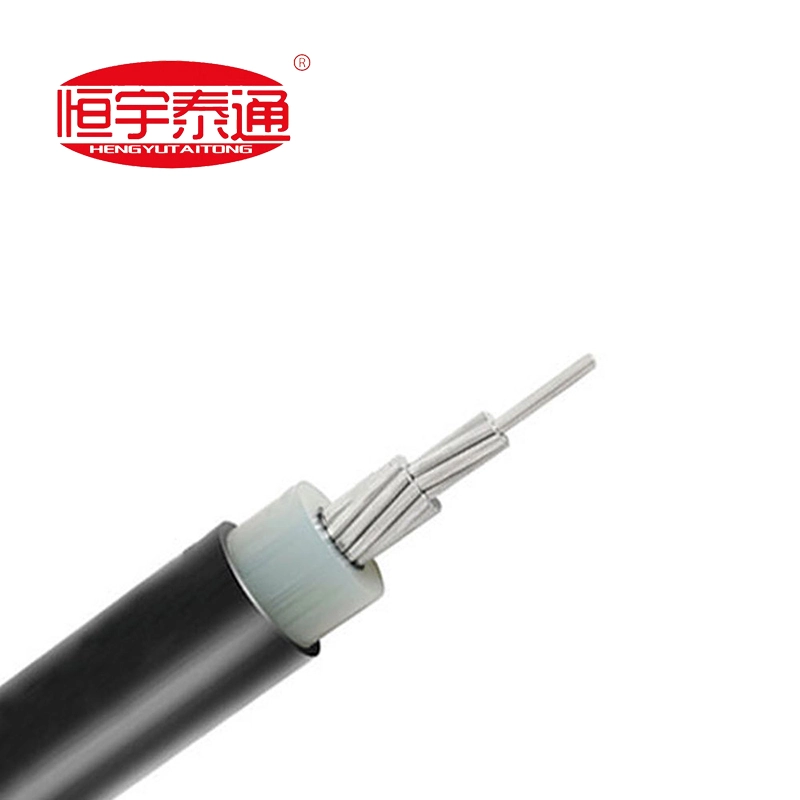
The operational superiority of an insulated ACSR cable lies in its dual-material concentric composite engineering. Each component serves a distinct mechanical and electrical purpose:
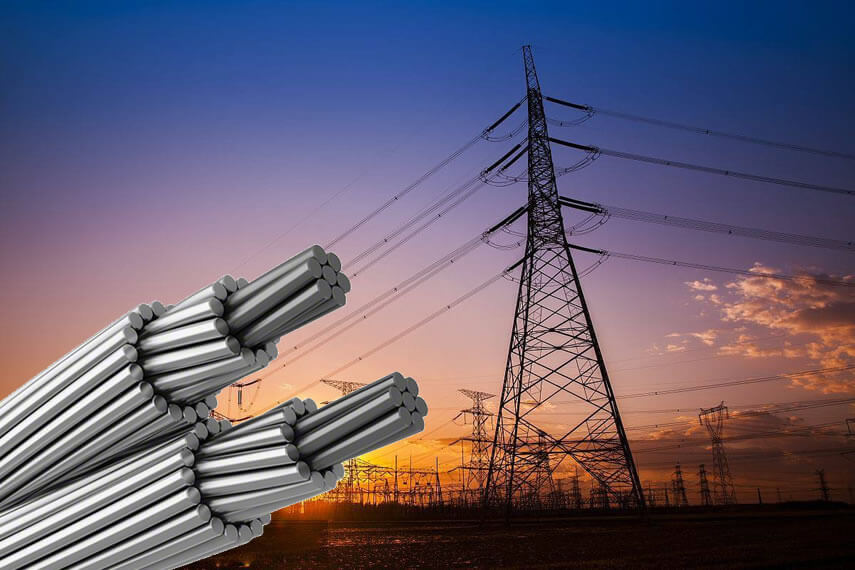
Central Steel Core: Composed of single or stranded galvanized steel wires. This core acts as the mechanical backbone, carrying the majority of the physical pulling tension and allowing wider utility pole spacing.
Outer Aluminum Strands: Concentric layers of high-purity hard-drawn aluminum wires surrounding the steel center, providing excellent electrical conductivity and maintaining a lightweight profile.
Weather-Resistant Insulation Layer: A heavy-duty, UV-stabilized Cross-linked Polyethylene (XLPE) or High-Density Polyethylene (HDPE) coating that wraps the entire conductor assembly to isolate the live circuit from external contact.
Why ACSR Outperforms Standard Conductors in Long-Distance Transmission
For long-distance municipal grids and valley-crossing lines, insulated ACSR provides decisive field advantages over traditional wiring options:
1.Exceptional Mechanical Tensile Strength: The high-elasticity steel core handles severe mechanical stress, preventing the cable from stretching or breaking under extreme windstorms or heavy ice loads.
2.Extended Span Capabilities: Increased tensile capability means utilities can install significantly fewer poles or transmission towers per kilometer. This directly reduces civil engineering labor, hardware costs, and overall project deployment times.
3.Optimal Weight-to-Conductivity Ratio: By pairing high-strength steel with lightweight aluminum, the conductor delivers high-amp capacity without overloading the physical carrying limits of utility poles.
Mitigating Environmental Hazards in Overhead Grids
Why are global public utility bills of quantities (BOQ) replacing old bare wires with insulated ACSR?
Eliminating Tree-Contact Short Circuits: In forested or rural expansion zones, growing branches frequently brush against bare lines, causing transient ground faults and localized bushfires. The premium insulation layer completely eliminates short-circuiting upon contact.
Enhanced Public Safety: Insulated overhead lines protect maintenance crews and the public from accidental electrocution caused by fallen lines, high-wind swinging, or close-proximity construction cranes.
Reduced Phase Spacing: Because the lines are safely insulated, the physical air gap required between different phases can be heavily minimized, allowing utility companies to route multi-circuit networks through narrow urban corridors.
Technical Specifications and Project Procurement
Infrastructure development requires precise technical conformity to international benchmarks like IEC 61089 and regional standards.
| Structural Feature | Specification Detail | Project Performance Advantage |
| Core Material | Galvanized Steel Wire (High Tensile) | Carries heavy overhead load strains, preventing conductor sagging |
| Conductive Layer | Hard-Drawn Aluminum Strands | Ensures high-efficiency power flow over long regional distances |
| Insulation Polymer | UV-Stabilized XLPE / HDPE | Resists intense sunlight, tropical rainfall, and environmental tracking |
At Taitong Cable, we operate a 100% factory-direct customized production model. Rather than pushing static inventory, we calibrate the precise steel-to-aluminum ratio, cross-sectional areas, and insulation thicknesses to match the unique terrain profiles, span lengths, and wind-load calculations specified in your project's tender documentation.
Contact our overhead line engineering department today to secure verified technical datasheets, structural design layouts, or to obtain an immediate factory cost estimation for your upcoming power grid expansion project!
Related News
- How Can Civil Installation Wires Improve Electrical Safety and Reliability in Modern Buildings
- Why Is Low voltage 2-5 core Copper conductor PVC insulated and sheathed power cables the Universal Gold-Standard Wiring Solution for All Global Construction and Industrial Power Projects in 2026
- How Do Heavy-duty Rubber Sheathed Flexible Cables Ensure Reliable Power Transmission in Harsh Environments?
- Why 4-Core Armored Aluminum Cables Power Grids
- Why 0.6/1kV Aluminum Armored Cables Power Grids
- Why Overhead Insulated Aluminum Cables Power Grids
Leave me a message