English
- English
- Español
- Português
- русский
- Français
- 日本語
- Deutsch
- tiếng Việt
- Italiano
- Nederlands
- ภาษาไทย
- Polski
- 한국어
- Svenska
- magyar
- Malay
- বাংলা ভাষার
- Dansk
- Suomi
- हिन्दी
- Pilipino
- Türkçe
- Gaeilge
- العربية
- Indonesia
- Norsk
- تمل
- český
- ελληνικά
- український
- Javanese
- فارسی
- தமிழ்
- తెలుగు
- नेपाली
- Burmese
- български
- ລາວ
- Latine
- Қазақша
- Euskal
- Azərbaycan
- Slovenský jazyk
- Македонски
- Lietuvos
- Eesti Keel
- Română
- Slovenski
- मराठी
- Srpski језик
Why 10kV Overhead Insulated Cables Upgrade Grids
Summary: For medium-voltage overhead power distribution, ensuring uninterrupted supply while minimizing maintenance overhead is a primary goal for utility companies. Overhead insulated cables rated up to 10 kV have emerged as the premier standard for upgrading aging power networks. This article breaks down the structural design, core engineering advantages, and environmental safety mechanisms of modern 10 kV Aerial Bundled Cables (ABC), guiding project procurement managers toward optimizing line reliability.
Table of Contents
Structural Anatomy of 10 kV Overhead Insulated Cables
Key Operational Advantages Over Traditional Bare Conductors
Essential Application Scenarios in Regional Power Tenders
Factory-Direct Compliance and Custom Sourcing
Introduction
As urban spaces expand and rural electrification demands grow, traditional bare overhead conductors are increasingly exposing network vulnerabilities. Exposed to the elements, uninsulated mid-voltage lines are highly susceptible to faults triggered by overgrown trees, high winds, and wildlife, leading to costly localized blackouts. To mitigate these infrastructure risks without incurring the massive capital expenditures associated with underground trenching, global power authorities are quickly turning to 10 kV overhead insulated cables.
Engineered for demanding outdoor environments, Taitong Cable manufactures high-durability medium-voltage overhead insulated cables. Utilizing advanced cross-linking insulation compounds and high-purity conductor cores, our products deliver exceptional mechanical and electrical safety to overhead lines worldwide.
Structural Anatomy of 10 kV Overhead Insulated Cables
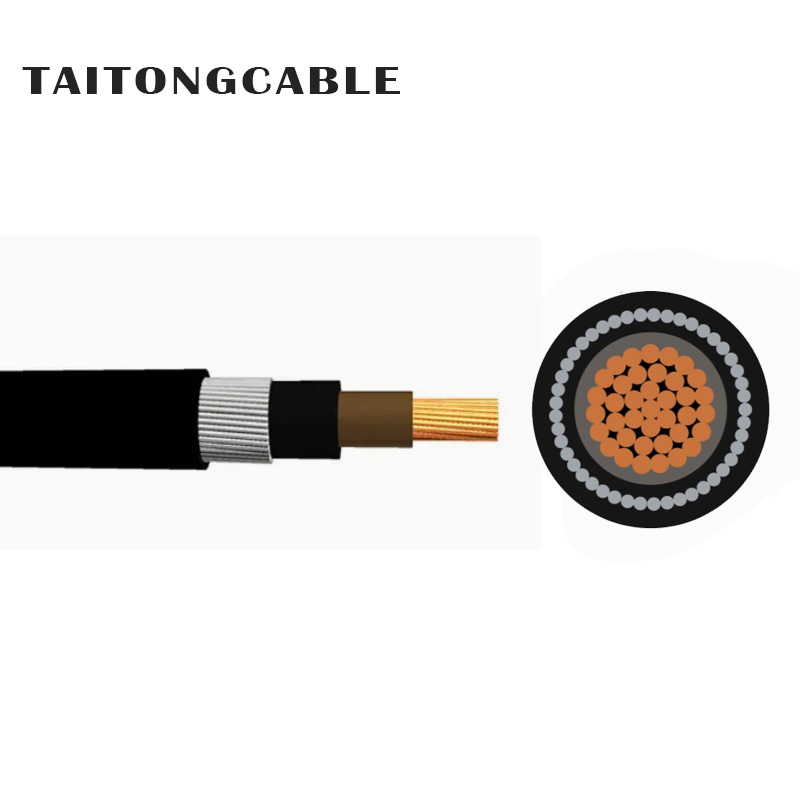
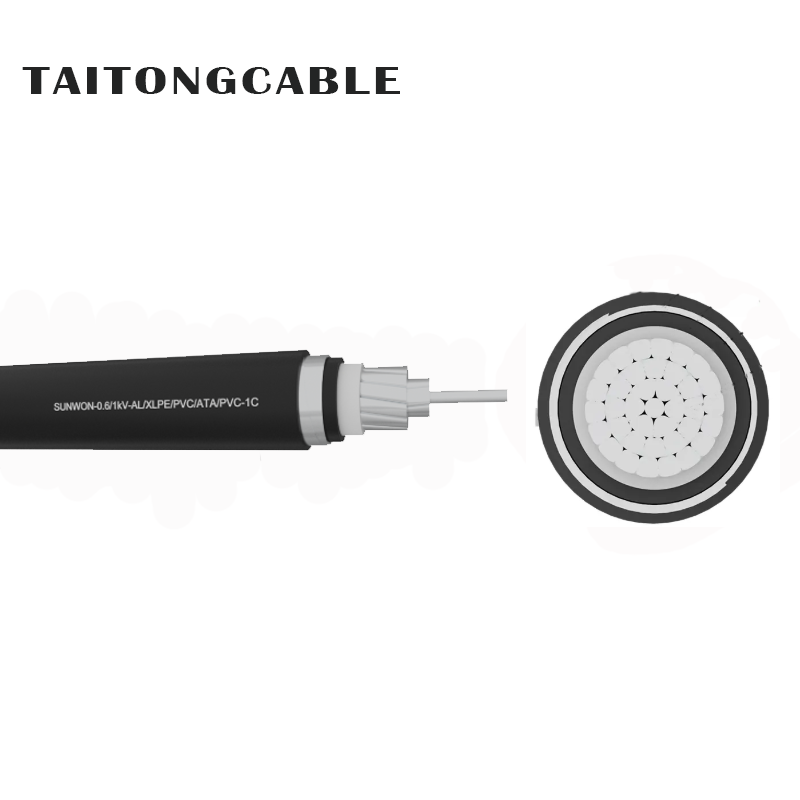
The structural build of a 10 kV overhead insulated cable is meticulously balanced to optimize both lightweight handling and absolute circuit containment:
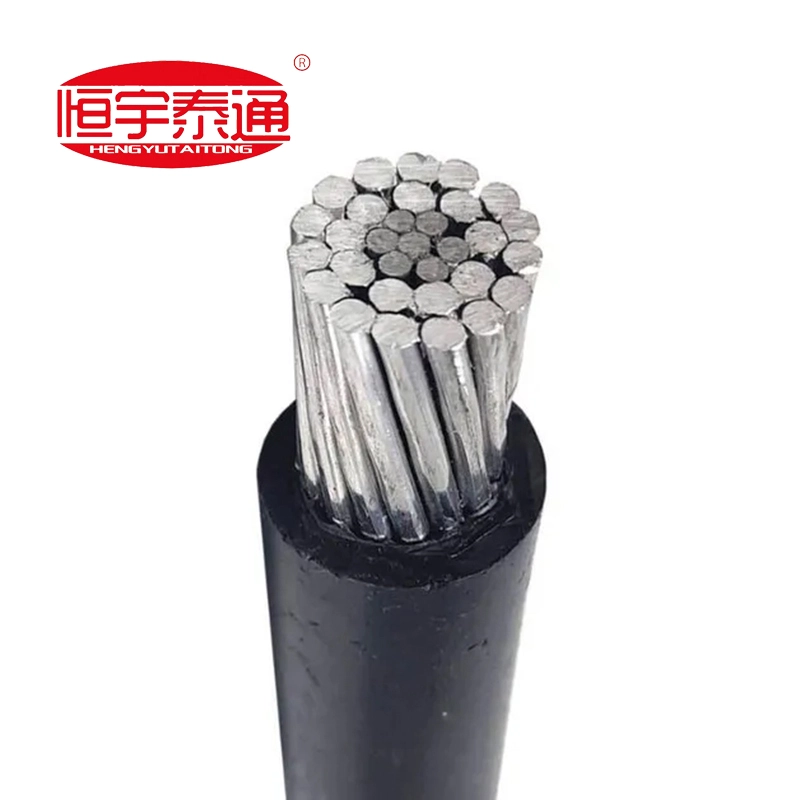
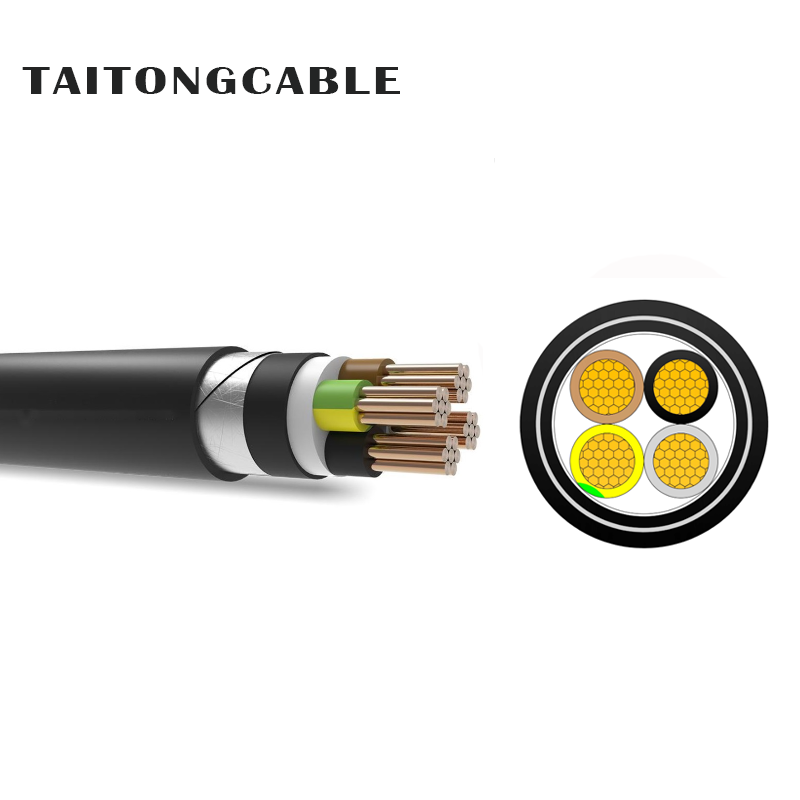
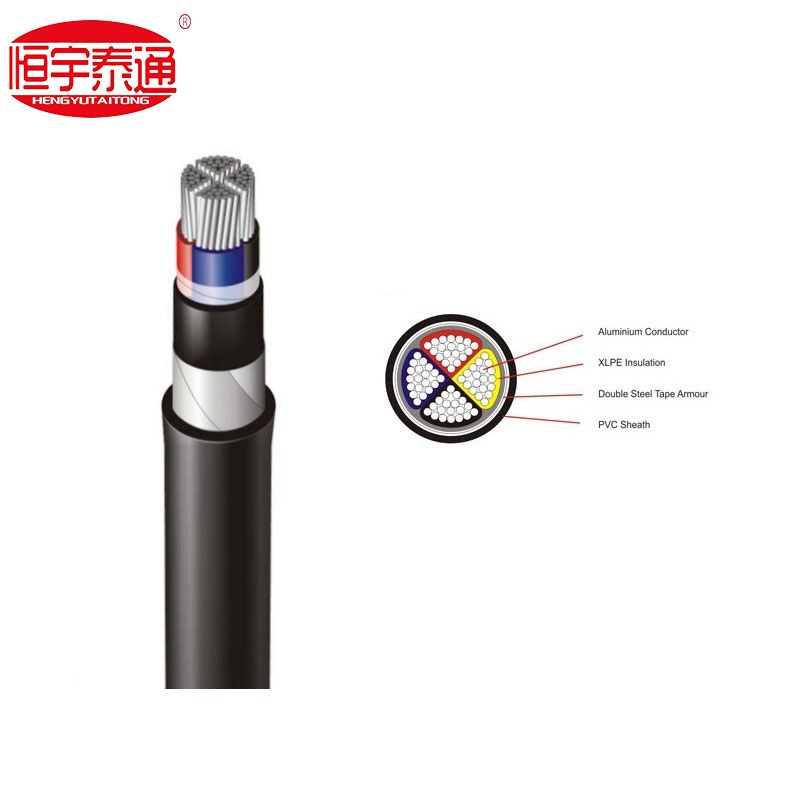
Phase Conductors: Composed of high-purity, circular compacted stranded aluminum wires. Compacting reduces the conductor diameter and smooths the surface profile, ensuring uniform electrical stress distribution.
Messenger Core (Optional/Composite): Incorporates high-tensile galvanized steel-core strands or reinforced aluminum alloys to carry the structural mechanical tension across long spans between transmission poles.
Heavy-Duty Weather-Resistant Insulation: Extruded with premium Black Cross-linked Polyethylene (XLPE) or High-Density Polyethylene (HDPE). This compound is heavily saturated with specialized carbon black to provide maximum protection against persistent solar ultraviolet (UV) radiation and ozone cracking.
Key Operational Advantages Over Traditional Bare Conductors
Transitioning to 10 kV insulated overhead lines provides power utilities with decisive, quantifiable advantages in the field:
1.Elimination of Tree-Contact Outages: In densely forested or tropical areas, branches touching bare conductors trigger immediate short circuits and potential forest fires. Insulated jackets completely isolate the current, allowing the line to function safely even during physical contact with overgrown vegetation.
2.Reduced Phase Spacing & Narrower Right-of-Ways: Because the conductors are fully insulated, the mandatory air clearance between phases is significantly reduced. This allows utilities to install multiple circuits on a single pole or route power through tight urban corridors.
3.Advanced Anti-Icing and Wind-Load Resilience: The smooth, round outer polymer sheath discourages heavy ice accumulation and offers lower wind resistance compared to standard open-wire configurations, preventing line snapping during severe storms.
Essential Application Scenarios in Regional Power Tenders
Thanks to their structural resilience and low installation complexity, 10 kV overhead insulated cables are widely utilized across global grid expansion projects:
Urban Residential Power Upgrades: Replacing old bare wire systems in congested residential areas where underground excavation is physically or financially impossible.
Forest and Rural Grid Expansion: Routing safe medium-voltage lines through dense woods, agricultural zones, or mountain terrains without the need for aggressive, costly tree-clearing campaigns.
Coastal and Corrosive Environments: The heavy outer insulation isolates the internal metal conductors from salt-spray corrosion, chemical air pollution, and high humidity.
Factory-Direct Compliance and Custom Sourcing
Mid-voltage public infrastructure projects allow no room for structural vulnerabilities. Every overhead line deployment mandates exact technical alignment with international quality criteria like IEC 60502-2 or localized utility specifications.
| Technical Parameter | Range & Specifications | Heavy Project Benefit |
| Rated Voltage (U_0/U) | Rated up to 10 kV | Perfectly calibrated for mid-voltage urban and rural distribution grids |
| Insulation Material | Weather-Resistant XLPE / HDPE | Maximum protection against intense UV rays, tracking, and thermal stress |
| Conductor Profile | Compacted Stranded Aluminum / Steel Core | Maximizes conductivity while maintaining high-tensile stability across wide spans |
At Taitong Cable, we adhere strictly to a 100% factory-direct customized production model. We do not push pre-made warehouse clearance stock. Instead, we engineer and manufacture each batch of 10 kV overhead insulated cables directly against your specific project bill of quantities (BOQ)—tailoring the exact core structures, messenger core strengths, and insulation cross-sections to match your localized span distances and climate profiles.
Contact our overhead distribution engineering team today to access verified technical drawings, type-test certificates, or to obtain a fast, factory-direct cost estimation for your upcoming power grid tender!
Related News
- How Can Civil Installation Wires Improve Electrical Safety and Reliability in Modern Buildings
- Why Is Low voltage 2-5 core Copper conductor PVC insulated and sheathed power cables the Universal Gold-Standard Wiring Solution for All Global Construction and Industrial Power Projects in 2026
- How Do Heavy-duty Rubber Sheathed Flexible Cables Ensure Reliable Power Transmission in Harsh Environments?
- Why 4-Core Armored Aluminum Cables Power Grids
- Why 0.6/1kV Aluminum Armored Cables Power Grids
- Why Overhead Insulated Aluminum Cables Power Grids
Leave me a message